Why I started Memoiry
Published
Written by Andy McNulty
Founder story, Memoir, Family stories
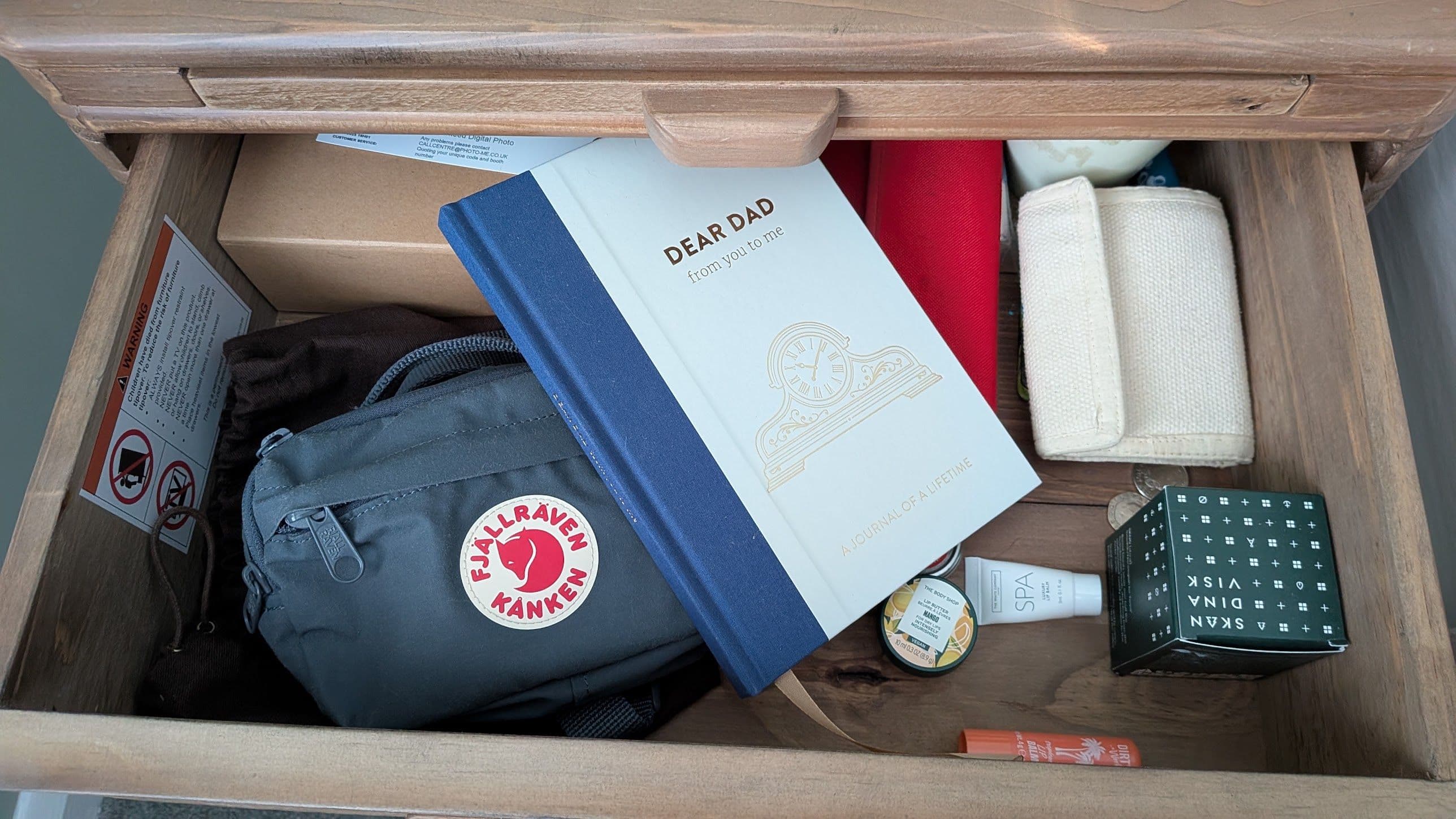
A year ago my daughter, Maia, gave me a book of prompts for writing my life story. It was a thoughtful present, but it was also a way of saying she wanted to know more about my life and my memories. At first I put it on my bedside table, with good intentions to start it. Weeks later I relegated it to my bedside drawer, and I never wrote in it. I couldn't shake the 'letdown' feeling: someone I love was asking for something and I was silently ignoring it.
I've thought a lot about why, because I like writing. I just rarely make the time, mostly because something else always seems more important. There was also a more practical problem. I find typing far easier than handwriting, and a lot of that comes down to editing. If I make a mistake on paper, it's there for good (unless I make a mess by scrubbing it out!), and if an answer won't fit the space, I'm stuck. The act of writing by hand became my blocker!
The book also had a huge number of questions. Some were perfect for me, but some had nothing to do with my life. That meant either leaving pages empty or working out how to add my own questions, which gave me one more reason to leave it in the drawer. I also like to talk things through. These were my memories, but I wanted someone to read what I'd written and ask me something relevant, to tease a bit more out of it. The book obviously couldn't do that. And, whenever I come up against a problem, my immediate thought is: what can I do about it. That’s where the idea of an online memory book started to surface.
An old-fashioned idea
Around the same time, my father-in-law was writing his memoir. He didn't need help. He's thorough and organised, and he was happy to take his time and write a lot of detail over a number of years. That suits him, and I suspect he'd still prefer typing into a Word document to anything I could build.

But what struck me was how interesting it was when he told us some of what he'd been writing. It also made me realise how old-fashioned the idea of a memoir felt, as if nobody does that any more. Writing one seemed like something you earn by reaching your eighties, or by being famous, or by having done something remarkable.
I think that's where memories get lost. Most of us file memoir under 'not for me' before we've considered it, and the stories stay in our heads. I wondered whether there was a lighter way to capture them. It wouldn't need years of work or a strict chronological march through your life. It could be something you do in your own order, in smaller pieces, in a way that suits you. And, crucially, it had to be as simple and straightforward as opening a Word document or a Google Doc.
A book I read years earlier
The seed was actually planted well before any of this. A few years ago I read Broken Horses by Brandi Carlile, which she calls a memoir. I loved it. Near the end she urges readers to write their own lives, however young or old they are and however uninteresting they think they are. She also says the unexpected side effect is that it feels good to be known, even if only by yourself:
“Write your life. No matter how young or old, even if you feel like you're not interesting enough, do it. Believe me, you are. Your life is in fact twisted, and beautiful. And you'll find that as you peel back the layers, the unexpected side effect is that it feels wonderful to be known, even if it's just by you.”
Her life is nothing like mine, but I came away feeling that I had a story too. (Of course, I then quickly filed this under 'one day I'll do it'!)
Her repositioning of what a memoir is has stayed with me. Memoirs are for everyone, not a factor of our self-defined 'I'm not worthy' construct. They're about stopping to notice how varied and complicated we all are, with the uniqueness that results. And, at least for me, it's rooted in the value it gives others. Many of us see our lives as uneventful, even average, but the people who love us rarely do.
It reminds me of my time running Touch Stay. At a trade show, a guy called Michael O'Connell said I should write my story and call it From Gucci to Guidebooks. It was tongue-in-cheek, but it stuck, because it reminded me how different I'd made my life. I'm always asked why I gave up a well-paid career in fashion to start such a niche business, yet I never really gave it a second thought; it didn't feel like a particularly groundbreaking pivot to me. Maybe I need to write this segment of my life down, an honest version rather than a 20-second answer. And I wonder how many other people are carrying what they consider to be unspectacular personal stories.
The walking weekend
What finally pushed me to build something was a weekend away with old university friends. We walk together every year. Mostly we catch up on the obvious things, work and family, poke fun at each other, have a few drinks, and so on.
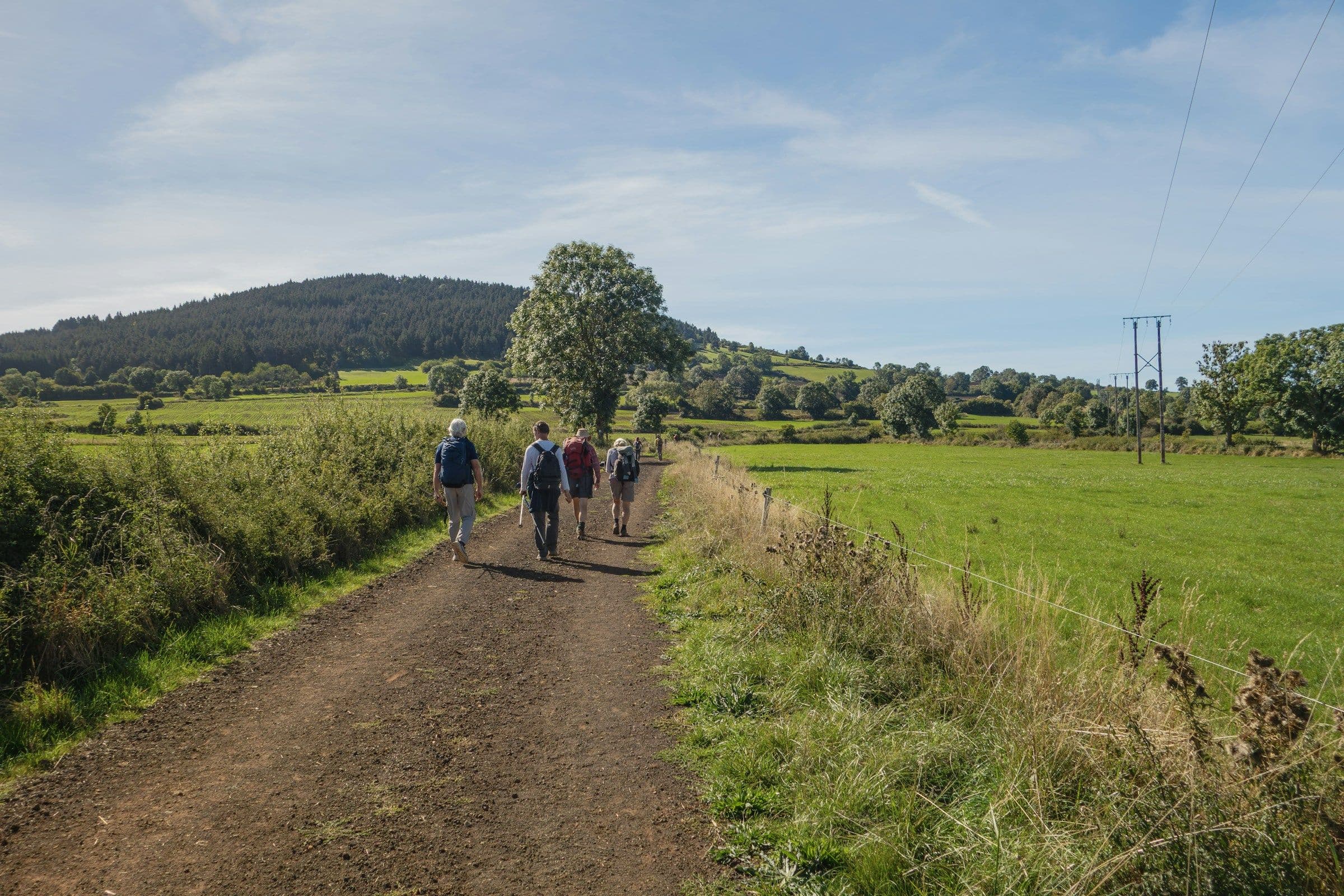
This time, though, the theme of parents came up. Some had lost a parent, and with them a lot of memories they hadn't asked about in time. Some had difficult relationships and knew very little about their parents' lives. I didn't mention Memoiry or the idea of capturing memories. I just listened, and I noticed how universal the wish was: to know more about the people we love, such as where they grew up, what advice they'd give, how they felt about things, and so on.
It's not born out of morbidity, nor is it about someone getting older. It's closer to 'I'd like to know you better', a wish to find a few missing pieces of our life's puzzle, to understand where we come from, because their history shapes ours. It's why shows like Who Do You Think You Are? exist, and why so many people trace their family trees. The same applies to siblings, to our children, and to ourselves. Why not write things down as we go, no matter what age we are? It helps us to see ourselves in context, and it's there for the people we're connected to, today and tomorrow.
So I built an online memory book
Memoiry is a companion that asks one question at a time, and your answers are kept in your own words. It doesn't rewrite them. That was a deliberate decision, since the point is to preserve how a person actually says things. It's also not in strict chronological order, which would be too limiting. We've found in testing that being able to start anywhere quashes writer's block! And when the conversation starts to meander off-topic, a separate memory is opened up for you to explore, making it feel very organic.
Of course, it won't suit everyone. Some people will always prefer a notebook or a Word document. But my hope is that it inspires more of us to start jotting down our own memories, and to encourage those around us to pen theirs. So if you have a prompt book in a drawer, or a vague intention to ask your parents more about their lives, or a feeling that your own story isn't worth telling, I understand. I had all three.
P.S. What about that prompt book in my drawer? Well, it's still there, but I'm now completing something lighter: my own Memoiry. Every time I have a recollection, I open my phone and jot it down (or, in my case, voice type it).